Module 5/Lesson 4 of 5
Lane Changes & Passing
Safe lane-change procedures, passing rules, passing at night, streetcars, and when not to pass.
Changing Lanes
A lane change is shifting from one lane into another where a road carries two or more lanes going the same way. Reasons you might do it include:
- Getting past another vehicle
- Steering clear of a parked car
- When the car ahead is slowing to make a turn
Never move between lanes without signalling properly and checking that the manoeuvre is safe.
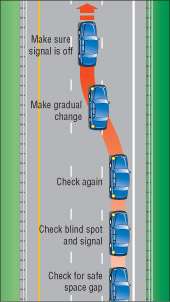
How to change lanes:
- Glance in your mirrors to find a gap in traffic
- Clear your blind spot with a shoulder check toward the lane you want, watching closely for bicycles and other small vehicles, then signal your intent.
- Look once more -- be sure nothing is approaching quickly from behind or from two lanes across
- Ease smoothly into the new lane without slowing; hold your speed or build it up a little

Important
Don't dart abruptly across lanes and cut off another vehicle. Steer clear of needless lane changes and weaving, particularly when traffic is heavy or the weather is poor.
Lane Change Safety Tips
- Don't swerve into a lane and cut off another road user, bicycles included
- The drivers around you count on you holding your lane
- Stay away from pointless lane changes and weaving back and forth -- the collision risk climbs in heavy traffic or rough weather
- Hold off on lane changes at or close to an intersection
- Keep in mind that waiting a few seconds behind a vehicle is frequently safer than passing it
Passing Another Vehicle
Passing means switching lanes to get by a slower vehicle. Only overtake when you are certain it can be done with no risk to yourself or anyone else. Never pass a moving snow plow, no matter the circumstances. When you are unsure, hold back.
How to pass:
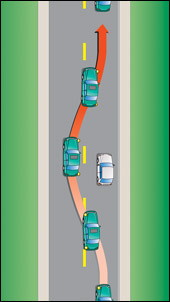
- Flick on your left-turn signal and verify the road is clear both ahead and behind before pulling into the passing lane
- Look out for bicycles and small vehicles tucked out of sight in front of the vehicle you are overtaking, and stay alert for cars turning left or pulling in from side roads.
- Signal first, then change lanes. Once past, signal your return; only when the whole front of that vehicle appears in your inside mirror should you ease back in. Don't swing in front of it abruptly and cut it off.
- If the vehicle you are overtaking accelerates, don't turn it into a race -- drop back into your original lane. And never speed up while someone is passing you, since doing so is both unlawful and dangerous.

Where Passing is Prohibited
You are not allowed to pass:
- Inside 30 metres of a pedestrian crossover
- To the left of a centre line when within 30 metres of a bridge, viaduct or tunnel
- As you near the crest of a hill or round a curve where oncoming traffic is hidden from view and the clear distance is too short to pass safely
Warning
Keep from passing whenever you are inside 30 metres of a pedestrian crossover, and don't cross left of the centre line within 30 metres of any bridge, viaduct or tunnel.
Passing at Night
Take real care passing after dark:
- Drop your headlights to low beam as you close in on a vehicle from behind
- After signalling and clearing your mirrors plus blind spot, move out to overtake. Once you are alongside, flip on your high beams to light up more of the road in front.
- When the entire front of that vehicle shows up in your rearview mirror, you have enough room to slide back into the right lane. Signal as you return.
Passing and Climbing Lanes
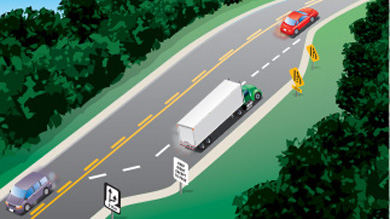
Certain roads include dedicated passing or climbing lanes. They give slower vehicles a place to shift into the right-hand lane while faster traffic overtakes safely on the left.
A sign posted in advance lets drivers know a passing opportunity is coming up, and a later sign signals that the lane is about to end so everyone can merge without trouble.

Passing on the Shoulder and Right
Using the shoulder to pass:
- The right shoulder can be used to get around a left-turning vehicle, but only where that shoulder is paved
- You may never use the left shoulder for passing, whether it is paved or not
Passing on the right:
- The left is where most passing happens
- Passing on the right is permitted where the road is multi-lane or one-way, as well as when you are getting by a streetcar or a left-turning vehicle
- Overtaking on the right carries more risk. Stuck behind a slow vehicle in the left lane? Wait for it to pull right rather than abruptly cutting over to pass on the right.
On high-speed roads carrying three or more lanes: trucks are barred from the far-left lane, which makes the next lane over the truck passing lane. If a truck wants by while you are in that lane, shift into the right-hand lane at the first safe chance.
Passing Streetcars
Streetcars must be passed on the right, except when you are on a one-way road.
Wherever a streetcar is stopped, hold back at least 2 metres behind its rear doors while passengers board or step off. That requirement is waived at stops that include a safety island. Roll past safety islands at a sensible speed and be ready for pedestrians to step out suddenly.
Important
Overtake streetcars on the right (one-way roads excepted), and keep a gap of 2 metres or more behind their rear doors while passengers get on or off.
Being Passed
If quicker traffic comes up behind wanting by, ease to the right and let it through safely.
Where you are being overtaken on an undivided road and the other driver has moved into the oncoming lane:
- Stay focused on traffic coming the other way
- Shift toward the right edge of your lane
- Be ready to back off the gas so the passing driver can slot in ahead of you sooner and avoid a crash
Key takeaways
- Always signal, check mirrors and blind spots before changing lanes
- Never cut in front of another vehicle or change lanes in/near an intersection
- Pull back in only once the whole front of the vehicle you passed shows up in your mirror
- Never pass within 30 metres of a pedestrian crossover, bridge, viaduct or tunnel
- Under no circumstances should you overtake a moving snow plow
- Pass streetcars on the right (except on one-way roads); stay 2 metres behind rear doors
- The right shoulder may be used for passing only to get around a left-turning vehicle, and only where it is paved
- Accelerating while another driver is overtaking you is against the law -- never do it