Module 2/Lesson 6 of 6
Headlights & Vehicle Lighting
When headlights are required, high vs. low beams, daytime running lights and lighting regulations.
Headlight Requirements
Headlights light up the road ahead when visibility drops, and they also make your vehicle easier for others to spot.
Your vehicle's headlights have to:
- Cast a white light seen at least 150 metres ahead
- Be bright enough to reveal objects 110 metres away
In addition, you need:
- Red rear lights visible from a distance of 150 metres
- A white light illuminating the rear licence plate whenever the headlights are on

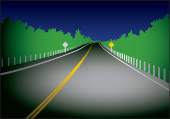
When to Use Headlights
You're required to switch your headlights on:
- From half an hour before sunset until half an hour after sunrise
- During any other stretch of poor light -- fog, snow or rain, for instance -- that stops you from clearly seeing people or vehicles closer than 150 metres
Don't drive with a single working headlight or with lamps that are poorly aimed. Get the entire lighting system inspected on a regular basis, keep the lenses clean, and swap out burned-out bulbs as soon as you can.
Important
Keep your headlights on from half an hour before sunset through half an hour after sunrise, and any time poor visibility (fog, snow, rain) stops you from clearly seeing 150 metres ahead.
High Beams vs. Low Beams
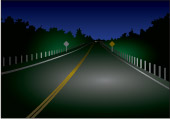
Your headlights have two settings: high beams (which extend your view farther down the road) and low beams (which cut down glare when you're close to other vehicles).
When to switch:
- Once an oncoming vehicle is within 150 metres, drop to your low beams
- When following, keep your low beams on if you're closer than 60 metres to the vehicle ahead -- the exception being while you pass it
- These rules hold on every road, divided ones included

Tip
Keep the distances in mind: dim to low beams once oncoming traffic is 150 metres away, and likewise within 60 metres of any vehicle you are following.
Other Lighting Systems
Switching on your headlights also powers the other required lights:
- Parking lights
- Tail lights
- Rear licence plate light
Parking lights exist for parking and nothing else. When the light is low, reach for your headlights rather than your parking lights.
Daytime Running Lights (DRLs)
Daytime running lights exist to boost your vehicle's visibility while the light is good. They come on by themselves once the vehicle is running and the headlight switch is set to off.
Important: DRLs are not meant to stand in for headlights when the light is poor. They:
- Can throw unsuitable glare toward others
- Can leave other required lights switched off, such as your tail lights
- Belong only to good-light conditions
If your vehicle has no DRLs, switch on your headlights to achieve the same boost in visibility.
Warning
Daytime running lights are NO replacement for headlights. They leave your tail lights off and may not light the road well enough in poor conditions.
Automatic Lighting Systems
Whenever your vehicle offers the option, leaving the full lighting system on automatic is the recommended choice. It does a better job of making sure the right lights are in use.
Even so, keep an eye on how and when your lights turn on and operate throughout your drive, so you can be sure the lighting in use is the appropriate one.
Key takeaways
- Headlights must reach 150 metres ahead and light up objects 110 metres away
- Turn on headlights from half an hour before sunset to half an hour after sunrise, and whenever visibility is poor
- Dim to low beams once oncoming traffic is 150 metres off, and within 60 metres of a vehicle you're following
- Daytime running lights can't fill in for headlights when conditions are poor
- Parking lights serve parking only -- don't rely on them while driving
- If your vehicle offers an automatic headlight setting, using it is recommended
- Red rear lights have to be visible from 150 metres away