Module 11/Lesson 1 of 3
Vehicle Maintenance
Daily driver habits, regular maintenance schedules, winter preparation, and tire safety standards.
Why Vehicle Maintenance Matters
Putting a vehicle on the road while it is in dangerous condition is against the law. Beyond the legal side, looking after your vehicle pays off financially -- you get better fuel economy and a higher resale value -- and it is easier on the environment too.
At any moment, a police officer or a Ministry of Transportation inspector has the authority to inspect your vehicle, its equipment, and any attached trailer. Should the vehicle turn out to be unsafe, it can be ordered off the road until the fault has been repaired.
Warning
Driving a vehicle that is in dangerous condition is against the law. At any time, police or MTO inspectors may inspect it and order it off the road if it is unsafe.
Driver Habits: When Approaching Your Vehicle
As you walk up to your vehicle each time, scan for:
- New damage
- Any fluids pooling beneath it
- Tires that are flat or low on air
- A hood, trunk, fuel door/cap, or doors left ajar
- Loads that are not tied down
- Built-up ice, snow, or dirt -- it can block your lights, hamper steering or your view, and turn into a danger for other road users if it breaks loose

Driver Habits: From the Driver's Seat Before Driving
Once seated and before you pull away, confirm:
- A clear view all the way around the vehicle
- Headlamps that are dim or burned out
- Warning lights on the dashboard as the engine starts -- they should light up briefly and then switch off
- Anything loose in the cabin that could fly forward and hit someone if you stop hard
Driver Habits: While Driving
Stay watchful for:
- Odd sounds from the engine or exhaust
- A squeal or grind whenever you press the brakes
- Warning lights that switch on while you drive
Whenever something seems off, it is worth digging deeper -- have a qualified mechanic look it over and carry out any repairs. Your owner's manual spells out, in detail, the things to watch for.
Driver Habits: Before an Extended Trip
For a longer journey, go beyond the everyday checks:
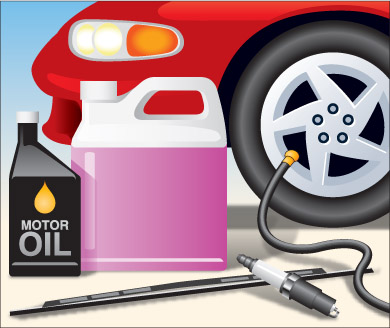
- Wiper blades and the level of washer fluid
- Tire pressure, along with overall condition and wear
- That every light is working
- Beneath the hood, with a cold engine: confirm oil and coolant levels, scan belts and hoses for obvious faults, and watch for any leaks (let your owner's manual guide you on what to look for)
- Think about booking a full inspection with a qualified mechanic
Regular Maintenance
To keep things running well, carmakers lay out a routine service schedule, typically triggered by either the kilometres driven or elapsed time -- whichever arrives first. You will find the specifics in your owner's manual.
Typical scheduled work covers:
- Changing the oil and filter
- Checking and replacing other fluids
- Swapping out air and fuel filters
- Rotating the tires
- Inspecting the brakes
From time to time, heavier jobs come up as well, such as engine tune-ups and replacing the timing belt.
Winter Maintenance
Keep a vehicle in good shape and it will normally fire up no matter what the weather throws at it.
Stock these emergency items for winter:
- A shovel
- A set of booster cables
- Warning lights or emergency flares
- A blanket
- A tow chain
Keep spare windshield washer fluid on hand through the winter and top up the reservoir whenever it runs low.
Exhaust safety: A defective exhaust poses an even greater risk in cold months, since drivers tend to keep their windows and vents shut. If yours rattles or sounds noisy, get it checked.
Tip
Pack a winter emergency kit: shovel, booster cables, emergency flares, blanket, tow chain, and spare windshield washer fluid.
Tire Safety Standards
Both the kind of tires you fit and how they are built make a big difference to grip, fuel economy, and safety. By law, tires have to satisfy the standards set out in the Canadian Motor Vehicle Safety Act.
Key tire rules and facts:
- Even sitting unused, tires break down over time. As they age they grip less well, crack more easily, and can blow without warning. Do not keep tires past 10 years old.
- Swap out tires once the tread drops below 1.5 millimetres or the tread-wear bars make contact with the road
- On vehicles heavier than 4,500 kg, the front tires need replacing once their tread falls below 3 millimetres
- Get rid of any tire showing bumps, bulges, knots, or exposed cords, or cuts in the tread or sidewall deep enough to reveal the cords
- A tire must be no smaller than the minimum size the manufacturer specifies, and no so large that it rubs the vehicle or interferes with safe handling
- Fit matching tires across all four wheels
- For the strongest winter grip, run four winter or all-weather tires that share the same tread pattern
- Drivers in northern Ontario are permitted to run studded tires

Important
Once tread drops below 1.5 mm, replace the tire. And retire any tire over 10 years old, even one that still looks fine.
Tire Maintenance Tips
Worn-out tires create a real environmental problem, so looking after them well stretches their lifespan and delays disposal:
- Keep them inflated correctly -- check the pressure often
- Watch for wear -- keep an eye out for uneven patterns
- Rotate them on schedule, following what the owner's manual suggests
- Drive smoothly -- steer clear of hard braking and aggressive cornering
Key takeaways
- Driving a vehicle in dangerous condition is against the law; police may inspect it and order it off the road
- Each time you walk up to your vehicle, scan for new damage, fluid leaks, tire problems, and loose items
- Dashboard warning lights should flash on at start-up then switch off -- look into any that remain lit
- Stick to the carmaker's service schedule in the owner's manual for oil changes, filters, and inspections
- Winter emergency kit: shovel, booster cables, flares, blanket, tow chain, and spare washer fluid
- A defective exhaust is especially risky in winter, when windows tend to stay shut
- Replace tires once tread drops below 1.5 mm (3 mm on heavy vehicles), and retire any tire over 10 years old
- Run four matching winter or all-weather tires for the best grip in winter
- Studded tires may only be used in northern Ontario