Module 8/Lesson 3 of 4
Temporary Condition & Information Signs
Construction zone signs, detour markers, and information and direction signs for destinations and services.
Temporary Condition Signs
Temporary condition signs flag short-lived, out-of-the-ordinary situations like construction zones, diversions, detours, closed lanes, or workers directing traffic on the road. They typically appear as a diamond shape with an orange background and black symbols or lettering.
Temporary condition signs you'll encounter:
- Construction work 1 km ahead
- Road work ahead
- Survey crew working on the stretch of road coming up
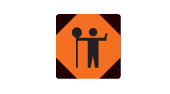
- Traffic control person ahead -- proceed slowly and follow the signals given
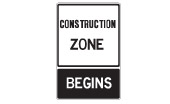
- Entering a construction zone -- take extra care and expect a reduced speed limit
- Temporary detour away from the usual traffic route
- Flashing arrows -- point out the direction you should take
- Pavement has been milled or grooved -- your braking may be affected, so obey the speed limit. Riders on motorcycles can find traction reduced here
- Lane ahead closed for roadwork -- obey the speed limit and merge into the lane that remains open
- Closed lane -- adjust your speed to merge into the lane the arrow points to
- Do not pass the pilot/pace vehicle
- Reduce speed and be prepared to stop
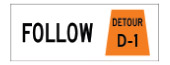
- Follow detour marker until you rejoin the regular route
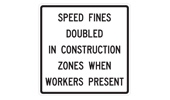
- Double fines sign -- doubles the HTA penalties for speeding through a designated construction zone whenever workers are on site




Important
An orange diamond signals construction or another temporary condition. Speeding penalties in a construction zone are DOUBLED whenever workers are on site.
Information and Direction Signs
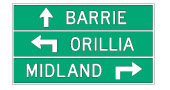
Information and direction signs let you know where places are and how far away they sit. Most are rectangular, with a green background and white lettering. Signs in other colours point the way to services, facilities, and attractions.
Information and direction signs you'll come across:
- Directions to nearby towns and cities
- Distances in kilometres along the road to nearby towns and cities
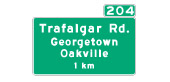
- Freeway exit signs -- many city exit ramps split into several lanes, so overhead and ground-mounted signs help you pick the right one
- Advance exit signs -- arrows mark which lanes peel off the freeway; a yellow box reading "EXIT" identifies the exit lanes
- Interchange numbers -- match the distance from where the freeway starts (for instance, interchange 204 on Highway 401 sits 204 km from Windsor). Work out the gap between two interchanges by subtracting one number from the other
- VIA signs -- spell out the roads to take in order to reach a destination
- Roundabout exit signs -- list the exits ahead and where each one leads
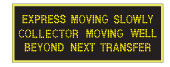
- Electronic signs -- update with the traffic situation, reporting current delays and lane closures
- Off-road facilities -- hospitals, airports, universities, or carpool lots
- Railway station route / Airport route
- Wheelchair-accessible facilities
- D sign -- Oversize load



Tip
A freeway interchange number tells you how many kilometres it lies from the freeway's starting point. To find the distance between two interchanges, just subtract one number from the other.
Key takeaways
- Temporary condition signs are diamond-shaped with an orange background -- they indicate construction and road work
- Fines for speeding are doubled in construction zones when workers are present
- Follow detour markers until you return to your regular route
- Do not pass a pilot or pace vehicle bearing a construction sign
- Information signs are rectangular with a green background and white letters
- Freeway interchange numbers correspond to the distance in kilometres from the start of the freeway
- Electronic signs provide real-time information about delays and lane closures
- Milled or grooved pavement can affect stopping ability -- motorcyclists face reduced traction