Module 1/Lesson 4 of 4
Licence Classes
Overview of Ontario's 12 licence classes, from Class A tractor-trailers to Class M motorcycles.
Overview of Licence Classes
Ontario sorts driver's licences into 12 separate classes, with each class authorizing a particular kind of vehicle -- and the class you hold has to line up with whatever you're driving.
Cars, vans and small trucks call for a Class G licence, and a Class G is the foundation you need before qualifying for any other vehicle type. Motorcycles are the single exception: a Class M motorcycle licence can be earned on its own, with no Class G required first.
To operate any vehicle fitted with air brakes, your licence needs a "Z" air brake endorsement.
Drivers holding class E, F or G licences can add an RV endorsement (the "T" endorsement), which clears them to drive a recreational vehicle of up to 14,000 kilograms.
Important
A Class G licence comes first before any other vehicle licence -- the exception being motorcycles (Class M), which can be obtained on their own.
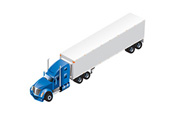
Class A -- Tractor-Trailers
Covers any tractor-trailer combination.
Also permits Class D and G vehicles.

Class B -- School Buses
Covers any school purposes bus.
Also permits Class C, D, E, F and G vehicles.

Class C -- Regular Buses
Covers any regular bus.
Also permits Class D, F and G vehicles.

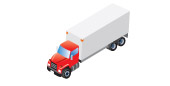
Class D -- Heavy Trucks
Covers a motor vehicle whose gross or registered gross weight tops 11,000 kilograms, plus any truck or combination as long as what it tows stays at or under 4,600 kilograms.
Also permits Class G vehicles.
Class D with RV restriction ("Q"): lets you drive a recreational vehicle no matter its weight, though not the other vehicles in Class D. Class G driving is included as well.

Class E -- Small School Buses
Covers a school purposes bus rated for no more than 24 passengers.
Also permits Class F and G vehicles.

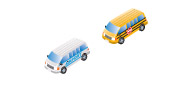
Class F -- Small Regular Buses & Ambulances
Covers a regular bus rated for no more than 24 passengers, as well as ambulances.
Also permits Class G vehicles.

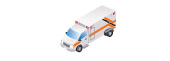
Class G -- Cars, Vans & Small Trucks
Covers any car, van or small truck, or a vehicle-plus-trailer combination of up to 11,000 kilograms, so long as the towed portion stays at 4,600 kilograms or less.
There's a specific case worth noting: a pickup truck hauling a house trailer heavier than 4,600 kilograms still counts as a Class G vehicle, provided the truck and trailer together don't push past 11,000 kilograms.
This is the class most new drivers are aiming for.

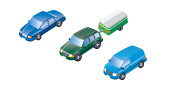
Class G1 & G2 -- Graduated Licensing
Class G1 -- the Level One stage of graduated licensing. A G1 holder may drive Class G vehicles as long as a fully licensed driver with four or more years of experience comes along, and certain other conditions apply (see Lesson 1.3).
Class G2 -- the Level Two stage of graduated licensing. A G2 holder may drive Class G vehicles on their own, though certain conditions still apply (see Lesson 1.3).
Class M -- Motorcycles
Covers any motorcycle, and that includes motor tricycles, limited-speed motorcycles (motor scooters) and motor-assisted bicycles (mopeds).
A Class M holder may additionally drive a Class G vehicle, subject to the same conditions that bind a Class G1 holder.
Class M1 -- the Level One motorcycle stage of graduated licensing. Holders may ride a motorcycle under certain conditions.
Class M2 -- the Level Two motorcycle stage of graduated licensing. A holder may ride a motorcycle provided their blood alcohol level is zero, and may operate a Class G vehicle under the same conditions a G1 holder faces.
Class M with L condition -- limited to operating a limited-speed motorcycle or moped.
Class M2 with L condition -- limited to operating a limited-speed motorcycle or moped.
Class M with M condition -- limited to operating a motor tricycle.
Class M2 with M condition -- limited to operating a motor tricycle.


Special Vehicles
Recreational vehicles in the band above 11,000 kg but under 14,000 kg call for a Class G, E or F licence carrying an RV endorsement. Once an RV reaches any weight at all -- anything over 14,000 kg included -- the requirement becomes a licence of Class A, B, C or D, or alternatively a Class D licence with the RV restriction.
Bicycles: riding a bicycle in Ontario takes no licence at all. That said, the Highway Traffic Act treats bicycles as vehicles, so cyclists carry rights and duties much like those of other drivers.
Tip
Riding a bicycle in Ontario needs no licence, yet cyclists are still bound by the rules of the road set out in the Highway Traffic Act.
Key takeaways
- Ontario's licences fall into 12 classes, one for each vehicle type
- Class G, the most common licence, covers cars, vans and small trucks
- A Class G must come before any other licence class -- except Class M for motorcycles
- Any air-brake equipped vehicle requires a "Z" air brake endorsement
- The "T" (RV) endorsement lets Class E, F and G holders drive RVs up to 14,000 kg
- G1 and G2 are the graduated levels for cars, while M1 and M2 are the motorcycle levels
- Cycling needs no licence, but cyclists are still bound by traffic laws